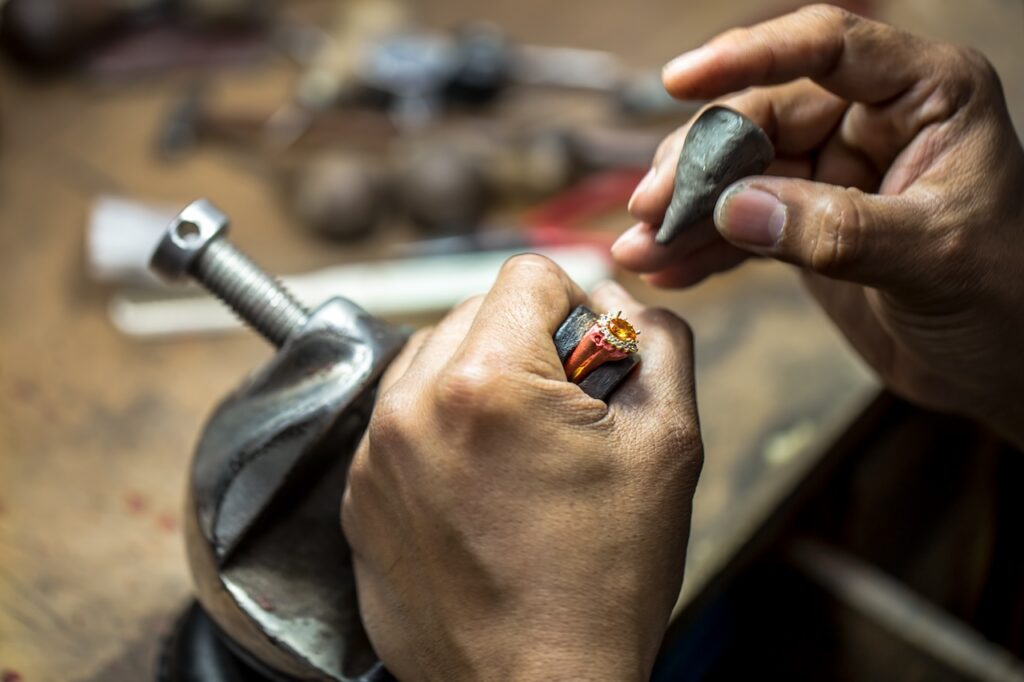
Jewelry tarnishes when metals react with moisture, skin oils, and chemicals in the environment. Professional jewelry restoration removes tarnish, repairs damage, and revives pieces that look beyond saving.
You reach for a favorite necklace, and it’s dull, dark, and nothing like you remember. Tarnish has a way of sneaking up on you, but it’s rarely permanent. Understanding what causes tarnish is the first step to preventing future damage, and knowing when to seek professional jewelry restoration can help you save a piece you thought was lost.
What Causes Jewelry to Tarnish?
Tarnish is a common issue that affects many types of jewelry over time. It occurs when metal reacts chemically with elements in its environment. It’s a natural process, but certain habits speed it up considerably. The most common culprits include:
- Exposure to air and moisture: Humidity accelerates oxidation, especially in silver and copper-based metals
- Skin oils and sweat: Your skin’s natural chemistry affects metal differently depending on your body’s pH
- Perfumes, lotions, and beauty products: Chemicals in these products can corrode metal surfaces over time
- Household cleaning products: Bleach and other agents are particularly harsh on metals
- Improper storage: Leaving jewelry exposed to air rather than sealed in a dry container speeds up the process
Not all metals tarnish at the same rate. Silver reacts quickly with sulfur compounds in the air, which is why sterling silver pieces often dull within weeks while gold-plated jewelry can last months before the base metal underneath starts to show through. Brass and copper are among the fastest to discolor, often developing a greenish patina that can transfer to skin.
Which Types of Jewelry Are Most Likely to Tarnish?
Brass, copper, and silver are especially prone to tarnishing. Even high-quality sterling silver—92.5% silver and 7.5% copper—tarnishes readily because the copper alloy is highly reactive. According to the Canadian Conservation Institute, silver reacts with sulfur-containing gases in the air to form silver sulfide, the dark coating we recognize as tarnish.
With gold-plated jewelry, the tarnish actually comes from the base metal beneath. Once the plating wears thin, that underlying layer is exposed to air and moisture. Even heirloom-quality pieces aren’t immune—with enough time and exposure, virtually any metal will show some degree of discoloration without proper maintenance. That’s what jewelry restoration is for.
Signs Your Jewelry May Need Restoration or Repair
Tarnish is just one signal that a piece needs jewelry restoration or other attention. Watch for:
- A dull, discolored, or darkened surface
- Visible scratches, dents, or other surface damage
- Loose or wobbly gemstones or damaged settings
- Worn clasps or weakened chain links
- Fading or flaking finishes
Some of these issues can be addressed with at-home cleaning. But when gemstones shift in their settings, prongs look bent or thin, or a clasp keeps coming undone, that’s the time for professional jewelry repair. Attempting DIY fixes on structurally compromised pieces can cause further damage—sometimes irreversibly.
How Jewelry Restoration Brings Pieces Back to Life
Professional jewelry restoration goes well beyond a quick polish. A skilled jeweler can:
- Remove tarnish and restore original luster through specialized cleaning and professional polishing
- Repair or rebuild prongs and settings to hold stones safely in place
- Replace worn clasps and solder broken chains
- Replate faded gold or rhodium finishes to bring back that original shine
- Restore vintage or sentimental pieces while carefully preserving their original character
The difference between a DIY cleaning and a professional jewelry restoration is significant. Jewelers use tools and techniques—like laser welders—that allow them to work on delicate or complex pieces without causing further damage. For inherited jewelry or pieces with sentimental value, that level of care matters enormously.
How to Prevent Jewelry Tarnish
A few simple habits go a long way:
- Store pieces in a dry, sealed container or anti-tarnish bag
- Keep jewelry separated to avoid scratches
- Remove jewelry before swimming, exercising, or using cleaning products
- Clean jewelry regularly using methods appropriate for each metal type
- Schedule periodic professional inspections for valuable pieces
Give Your Jewelry the Attention It Deserves
Tarnish doesn’t mean the end of a piece—it usually means it’s time for some care. Whether you’ve got a silver ring that’s lost its shine or a vintage brooch that needs more than a wipe-down, the team at Jewelry Artisans in Atlanta has been handling jewelry repair and restoration for over five decades.
From tarnish removal to full jewelry repair and restoration, walk-ins are welcome, and same-day jewelry repair is often available. Explore our jewelry services today at Jewelry Artisans.